Lifestyle during cancer treatment is no longer simply about feeling better. Exercise, nutrition, metabolic health, sleep, and psychological support can influence treatment tolerance, physical function, and quality of life. In at least one important setting, structured exercise has now demonstrated a disease free survival benefit in a randomized phase 3 trial.
That does not mean every diet, supplement, metabolic intervention, or lifestyle theory improves survival.
The goal is to separate what has strong human evidence from what is promising, what remains experimental, and what may actually interfere with treatment.
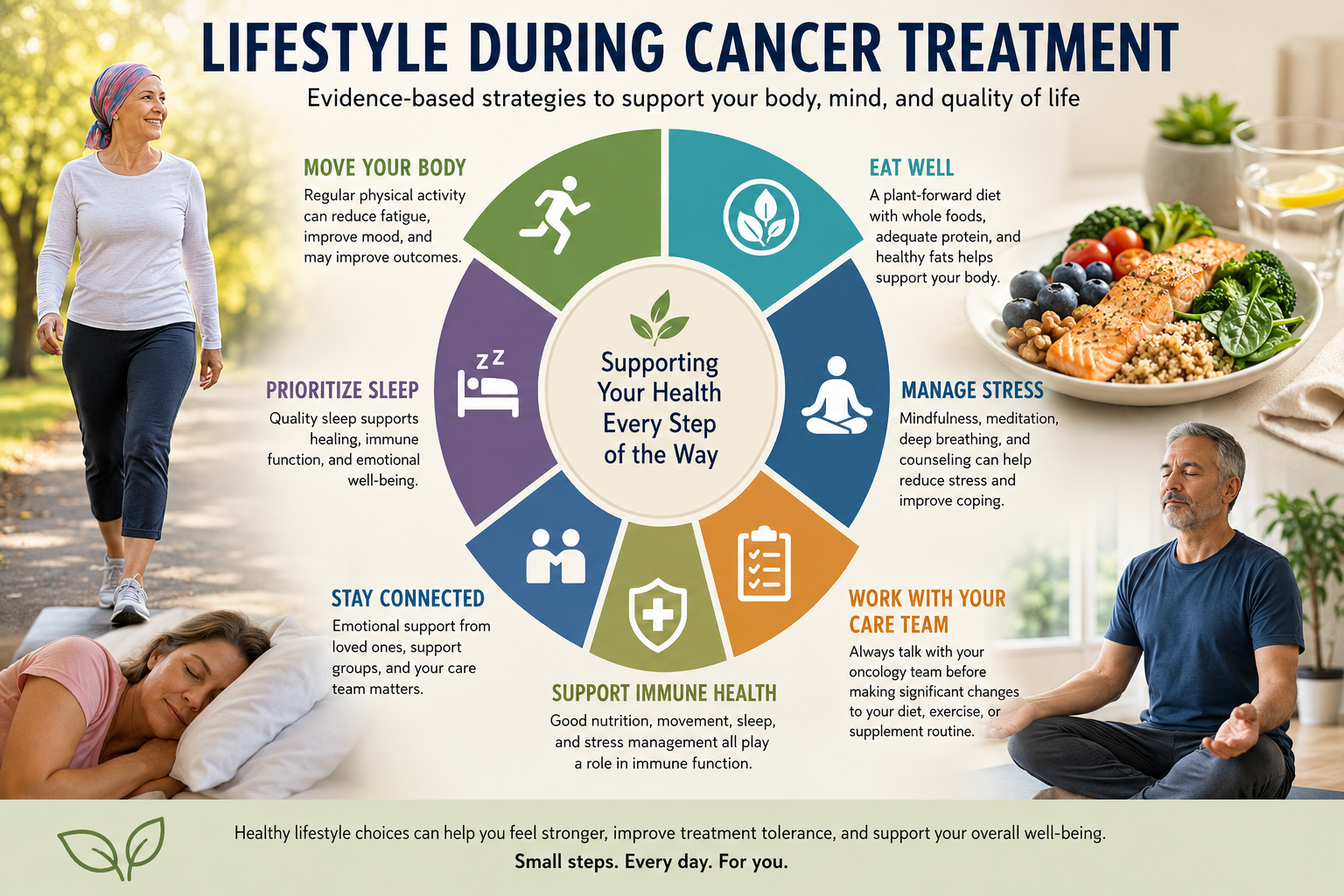
Why Lifestyle During Cancer Treatment Matters
One of the most important developments came from the CHALLENGE trial.
This randomized phase 3 study enrolled 889 patients with resected stage III or high risk stage II colon cancer who had completed adjuvant chemotherapy.
Patients were assigned either to a structured exercise program lasting three years or to health education alone.
After a median follow up of 7.9 years, disease free survival was significantly better in the exercise group.
The hazard ratio was 0.72, corresponding to a 28 percent relative reduction in the risk of recurrence, a new primary cancer, or death.
Five year disease free survival was 80.3 percent with structured exercise compared with 73.9 percent in the control group. Overall survival also favored exercise, with a hazard ratio of 0.63.
This does not prove that exercise produces the same survival benefit in every cancer.
But it establishes something important.
Lifestyle can be biologically meaningful cancer care.
Lifestyle During Cancer Treatment and Exercise
Lifestyle during cancer treatment should include nutrition that protects muscle, supports adequate calorie intake, and reduces excessive refined carbohydrates and added sugars.
In the cancer metabolism section, add this sentence near the end:
Understanding cancer metabolism can help place dietary strategies within the broader context of lifestyle during cancer treatment, rather than treating diet as a stand alone cancer therapy.
Exercise has also repeatedly been shown to reduce cancer related fatigue and improve physical function, mood, and treatment tolerance.
You do not have to exercise intensely.
During difficult chemotherapy days, walking around your house or down a hallway may be enough.
The important principle is consistency.
A reasonable general target for people who can safely achieve it is approximately 150 minutes of moderate activity each week together with resistance training approximately twice weekly.
Resistance exercise deserves particular attention because loss of skeletal muscle, or sarcopenia, is associated with poorer treatment tolerance and worse outcomes in several cancers.
Patients with bone metastases, severe anemia, significant neuropathy, neutropenia, cardiovascular limitations, or other major medical problems should discuss exercise intensity with their treatment team.
Lifestyle During Cancer Treatment and Nutrition
Nutrition advice in cancer is considerably more complicated than exercise advice.
The strongest evidence generally supports a plant forward dietary pattern emphasizing vegetables, fruits, legumes, whole grains, nuts, adequate protein, and minimally processed foods.
High intake of refined carbohydrates, sugar sweetened beverages, and processed meats has been associated with worse outcomes in several observational studies.
These studies are important, but they are not the same as randomized treatment trials.
People who eat healthier diets also frequently exercise more, smoke less, maintain healthier body weight, and obtain medical care more consistently.
For this reason, nutrition studies must be interpreted carefully.
Adequate protein is especially important during treatment because preserving muscle may be more important than pursuing a highly restrictive dietary theory.
Cancer Metabolism: Can We Starve Cancer?
Cancer cells need energy and nutrients to survive.
This field is known as cancer metabolism.
Cancer metabolism examines how cancer cells obtain, process, and use fuel to support growth, repair, division, and survival.
This raises an important question.
Can we interfere with cancer metabolism and make cancer cells more difficult to sustain?
The answer is more complicated than simply eliminating sugar.
Cancer cells can use glucose, but many cancers can also use glutamine, fatty acids, lactate, amino acids, and other metabolic substrates.
Some cancer cells can switch fuel sources when one pathway becomes restricted.
This metabolic flexibility is one reason simply removing carbohydrates from the diet cannot literally starve most cancers.
Modern cancer metabolism research instead looks for specific vulnerabilities.
A particular tumor may depend unusually heavily on glucose metabolism, glutamine metabolism, fatty acid oxidation, mitochondrial respiration, or another pathway.
The scientific goal is to identify those dependencies and determine whether they can be targeted without causing unacceptable injury to normal cells.
Cancer Metabolism and the Warburg Effect
Otto Warburg observed that many cancer cells consume large amounts of glucose and produce lactate even when oxygen is readily available.
This phenomenon is called the Warburg effect.
It remains one of the defining features of cancer metabolism.
Modern PET scanning takes advantage of increased glucose utilization by many tumors.
But the Warburg effect does not mean cancer cells are incapable of using mitochondria.
Most cancers retain functional mitochondria and can use oxidative phosphorylation as well as glycolysis.
The modern view is therefore more complex than the idea that cancer is simply a disease of sugar fermentation.
Does Sugar Feed Cancer?
You frequently hear the statement that sugar feeds cancer.
There is a kernel of truth surrounded by considerable misunderstanding.
Cancer cells use glucose.
So do your brain, muscles, immune cells, liver, and nearly every other tissue in your body.
Even if you consume no carbohydrate, your liver can manufacture glucose through gluconeogenesis.
Therefore, eliminating dietary sugar does not deprive a tumor of all glucose.
The better supported reason to reduce excessive refined carbohydrate and added sugar is metabolic health.
Chronically elevated insulin, insulin resistance, obesity, and related inflammatory signaling are associated with several cancers.
Reducing added sugar can therefore be beneficial without claiming that avoiding a piece of fruit directly starves a tumor.
Lifestyle During Cancer Treatment and Ketogenic Diets
A ketogenic diet sharply reduces carbohydrate intake and increases fat intake, lowering circulating glucose and insulin while increasing ketone bodies.
There is a legitimate biological rationale for studying ketogenic therapy in cancer.
Thomas Seyfried and others have argued that cancer should be viewed primarily as a metabolic disease and have proposed therapeutic strategies based on limiting glucose availability while increasing ketones.
This remains a minority position within academic oncology.
It has generated important research, but it should not be presented as established cancer therapy.
Human studies remain small and heterogeneous.
The area receiving some of the greatest interest has been glioblastoma and other brain tumors.
Even there, ketogenic therapy remains investigational.
There is also a serious competing risk.
Unintentional weight loss and loss of muscle are major adverse prognostic factors in cancer.
A restrictive diet that causes significant weight or muscle loss can potentially do more harm than good.
For that reason, ketogenic diets during active cancer therapy should generally be supervised by the oncology team and an oncology trained dietitian.
The Glucose Ketone Index
The glucose ketone index, or GKI, was developed as a way of describing the metabolic relationship between circulating glucose and ketone levels.
The equation is:
GKI = blood glucose in mmol/L divided by blood beta hydroxybutyrate in mmol/L
For glucose reported in mg/dL, divide the glucose value by 18 before calculating the ratio.
The original researchers proposed that lower GKI values may represent a metabolic state favorable for therapeutic metabolic strategies, particularly in brain cancer research.
But this requires an important qualification.
The GKI is not a validated surrogate for cancer survival.
It tells you whether you have achieved a particular metabolic state.
It does not prove that achieving that number will shrink a tumor or prolong survival.
Blood Ketones Versus Urine Ketones
If ketones are being monitored, blood beta hydroxybutyrate is considerably more useful than urine ketone strips.
Urine strips measure acetoacetate being excreted.
During the early stages of ketosis, urine ketones may appear high because the body is not efficiently utilizing them.
As metabolic adaptation develops, urine readings may fall even when circulating ketones remain elevated.
Hydration also affects urine concentrations.
Blood testing measures beta hydroxybutyrate, which is the principal circulating ketone and the value used to calculate the GKI.
Therefore, a true GKI cannot be calculated from urine ketone strips.
The Alkaline Diet: What It Can and Cannot Do
Another common claim is that an alkaline diet can change the body’s pH and make cancer unable to survive.
That is not how human physiology works.
Blood pH is tightly controlled, generally around 7.35 to 7.45.
Diet cannot substantially change blood pH in a healthy person.
If your blood pH changed significantly, it would constitute a medical emergency.
Diet can alter urine pH.
That is different from changing the pH of your blood or tumor.
The useful aspect of many so called alkaline diets is the food itself.
They tend to emphasize vegetables, fruits, legumes, nuts, and minimally processed foods.
Those can be healthy choices, but not because they alkalinize the bloodstream.
Tumor Acidity Is Real
There is, however, a scientifically important issue involving acidity inside the tumor microenvironment.
Cancer cells frequently generate lactate and protons through increased glycolysis.
Poor tumor blood flow may make removal of this acid less efficient.
The tissue surrounding a tumor can therefore become significantly more acidic than normal tissue.
This acidic microenvironment can promote invasion and may interfere with anti tumor immune function.
Acidity can suppress T cell activation and cytokine production while favoring immune suppressive elements within the tumor microenvironment.
This is a legitimate area of cancer research.
It should not be confused with claims that eating alkaline foods will change your tumor’s pH.
What About Sodium Bicarbonate?
Preclinical researchers have investigated whether systemic buffering can modify tumor acidity.
Animal experiments have shown that bicarbonate can increase extracellular tumor pH and, in some models, reduce metastatic behavior or enhance response to immunotherapy.
These findings are interesting.
They are not proof that patients should take baking soda for cancer.
Human evidence is extremely limited.
The sodium load can be substantial, particularly for patients with hypertension, heart failure, kidney disease, or edema.
Bicarbonate can also alter stomach acidity and potentially interfere with the absorption of oral anticancer drugs that depend on an acidic gastric environment.
Other potential complications include electrolyte abnormalities and metabolic alkalosis.
Baking soda should not be considered a cancer treatment.
Research into manipulating tumor acidity is very different from recommending self-treatment with sodium bicarbonate.
Lifestyle During Cancer Treatment and Sleep
Sleep is an important part of lifestyle during cancer treatment, because poor sleep can worsen fatigue, mood, concentration, and overall quality of life.
Sleep problems are extremely common during cancer treatment.
Pain, anxiety, steroids, hormonal therapies, chemotherapy, hospitalization, and circadian disruption can all contribute.
Poor sleep then worsens daytime fatigue, which can lead to more daytime sleep and further disruption of nighttime rest.
For chronic insomnia, cognitive behavioral therapy for insomnia, or CBT I, has strong evidence and has specifically been studied in patients with cancer.
Basic measures include maintaining a consistent wake time, obtaining morning light exposure, limiting prolonged daytime naps, and keeping the bedroom cool and dark.
Lifestyle During Cancer Treatment and Stress
Patients are sometimes told that they must remain positive to defeat cancer.
That message can become harmful.
A positive attitude does not cure cancer.
Fear, sadness, or anxiety do not mean that you have failed your treatment.
Psychological distress is nevertheless medically important.
Anxiety and depression can worsen quality of life, interfere with adherence to therapy, impair sleep, and increase symptom burden.
Psychological treatment, support groups, structured counseling, and mindfulness based interventions can help.
Treat emotional distress because it deserves treatment, not because you are responsible for controlling your cancer with your thoughts.
Building a Lifestyle During Cancer Treatment Plan
The best plan is usually one you can actually follow.
Start with a few priorities.
Move every day according to your ability.
Protect muscle with adequate protein and resistance activity when appropriate.
Eat vegetables and minimally processed foods while limiting excessive refined carbohydrate and added sugar.
Maintain adequate calories during treatment.
Prioritize sleep.
Treat persistent anxiety or depression.
Avoid unnecessary restrictive diets that cause weight loss.
And discuss supplements, metabolic strategies, and major dietary changes with your oncology team because they can interact with treatment.
For a broader discussion of treatment options, see Cancer Treatment Approaches.
Frequently Asked Questions
Should I exercise during chemotherapy?
Usually, yes, as tolerated.
Exercise during treatment can improve fatigue, function, and quality of life.
Patients with bone metastases, severe anemia, significant neuropathy, low blood counts, cardiovascular disease, or other major limitations should receive individualized recommendations.
Should I stop eating carbohydrates because sugar feeds cancer?
No.
Cancer metabolism is much more complicated than glucose alone.
Reducing refined carbohydrate and added sugars may improve metabolic health, but completely eliminating carbohydrates does not eliminate glucose from your body and does not reliably starve cancer.
Should I follow a ketogenic diet during cancer treatment?
Possibly in selected circumstances, but the evidence remains investigational.
The most important concern is avoiding unintended weight and muscle loss.
Discuss ketogenic therapy with your oncologist and an oncology trained dietitian before beginning a restrictive diet.
Do supplements improve survival?
That depends on the supplement, the deficiency being treated, and the cancer therapy involved.
Some supplements can interfere with cancer drugs or radiation therapy.
Do not assume that a natural product is automatically safe during cancer treatment.
The Bottom Line
Lifestyle during cancer treatment is now part of serious oncology care.
The strongest evidence currently supports physical activity, preservation of muscle, appropriate nutrition, good metabolic health, adequate sleep, and treatment of psychological distress.
Cancer metabolism is an important and rapidly developing field, but metabolic theories should not be confused with established treatment.
The goal is not to replace oncology.
The goal is to help your body tolerate treatment, preserve function, reduce avoidable health burdens, and use emerging metabolic strategies only when the evidence and clinical circumstances justify them.
Educational Disclaimer
This article is provided for cancer education only. It is not medical advice and does not establish a physician patient relationship. Diet, exercise, ketogenic therapy, supplements, bicarbonate, or other metabolic interventions should not be used independently to treat cancer or to replace established oncology treatment. Major dietary or metabolic changes should be discussed with your treating oncologist and, when appropriate, an oncology trained registered dietitian.
Dean R. Silver, M.D., MD(H)
References
- Courneya KS, Vardy JL, O’Callaghan CJ, et al. Structured exercise after adjuvant chemotherapy for colon cancer. New England Journal of Medicine. 2025;393(1):13 to 25.
- Campbell KL, Winters Stone KM, Wiskemann J, et al. Exercise guidelines for cancer survivors: consensus statement from international multidisciplinary roundtable. Medicine and Science in Sports and Exercise. 2019;51(11):2375 to 2390.
- Ligibel JA, Bohlke K, May AM, et al. Exercise, diet, and weight management during cancer treatment: ASCO guideline. Journal of Clinical Oncology. 2022;40(22):2491 to 2507.
- Fuchs MA, Sato K, Niedzwiecki D, et al. Sugar sweetened beverage intake and cancer recurrence and survival in CALGB 89803. PLoS One. 2014;9(6): e99816.
- Baudry J, Assmann KE, Touvier M, et al. Association of frequency of organic food consumption with cancer risk: findings from the NutriNet Santé prospective cohort study. JAMA Internal Medicine. 2018;178(12):1597 to 1606.
- Weber DD, Aminzadeh Gohari S, Tulipan J, et al. Ketogenic diet in the treatment of cancer: where do we stand? Molecular Metabolism. 2020; 33:102 to 121.
- Warburg O. On the origin of cancer cells. Science. 1956;123(3191):309 to 314.
- Seyfried TN, Flores RE, Poff AM, D’Agostino DP. Cancer as a metabolic disease: implications for novel therapeutics. Carcinogenesis. 2014;35(3):515 to 527.
- Meidenbauer JJ, Mukherjee P, Seyfried TN. The glucose ketone index calculator: a simple tool to monitor therapeutic efficacy for metabolic management of brain cancer. Nutrition & Metabolism. 2015; 12:12.
- Vander Heiden MG, Cantley LC, Thompson CB. Understanding the Warburg effect: the metabolic requirements of cell proliferation. Science. 2009;324(5930):1029 to 1033.
- Robey IF, Baggett BK, Kirkpatrick ND, et al. Bicarbonate increases tumor pH and inhibits spontaneous metastases. Cancer Research. 2009;69(6):2260 to 2268.
- Pilon Thomas S, Kodumudi KN, El Kenawi AE, et al. Neutralization of tumor acidity improves antitumor responses to immunotherapy. Cancer Research. 2016;76(6):1381 to 1390.
- Ibrahim Hashim A, Cornnell HH, Abrahams D, et al. Systemic buffers inhibit carcinogenesis in TRAMP mice. Journal of Urology. 2012;188(2):624 to 631.
- Ibrahim Hashim A, Abrahams D, Enriquez Navas PM, et al. Tris base buffer: a promising new inhibitor for cancer progression and metastasis. Cancer Medicine. 2017;6(7):1720 to 1729.
- Yang M, Zhong X, Yuan Y. Does baking soda function as a magic bullet for patients with cancer? A mini review. Integrative Cancer Therapies. 2020; 19:1534735420922579.
- Garland SN, Johnson JA, Savard J, et al. Sleeping well with cancer: a systematic review of cognitive behavioral therapy for insomnia in cancer patients. Neuropsychiatric Disease and Treatment. 2014; 10:1113 to 1124.
- IARC Monographs Volume 124 Group. Carcinogenicity of night shift work. Lancet Oncology. 2019;20(8):1058 to 1059.
- Coyne JC, Stefanek M, Palmer SC. Psychotherapy and survival in cancer: the conflict between hope and evidence. Psychological Bulletin. 2007;133(3):367 to 394.
- Andersen BL, Lacchetti C, Ashing K, et al. Management of anxiety and depression in adult survivors of cancer: ASCO guideline update. Journal of Clinical Oncology. 2023;41(18):3426 to 3453.