Understanding The Warburg Effect
One of the most important observations in cancer metabolism is called the Warburg effect.
Normal cells commonly generate much of their energy through mitochondrial oxidative phosphorylation. Many cancer cells increase their use of glycolysis and convert glucose to lactate even when oxygen is available.
This does not mean that cancer cells have stopped using their mitochondria. Many cancers retain substantial mitochondrial metabolism. Rather, cancer cells reorganize their metabolism to support rapid growth, production of cellular building blocks, resistance to stress, and survival.
This altered metabolism has become an important area of cancer research.
Does Sugar Feed Cancer?
Glucose is an important fuel for many cancers. It is also essential for normal tissues, particularly the brain, red blood cells, immune cells, and exercising muscle.
Therefore, eliminating dietary sugar does not eliminate glucose from the bloodstream. The body can manufacture glucose through processes such as gluconeogenesis.
This is why the statement that a person can simply stop eating sugar and “starve cancer” is misleading.
The more scientifically useful question is whether glucose availability, insulin signaling, or cancer’s ability to metabolize glucose can be modified in ways that make particular tumors more vulnerable.
Cancer Can Change Its Fuel Source
Cancer is metabolically adaptable.
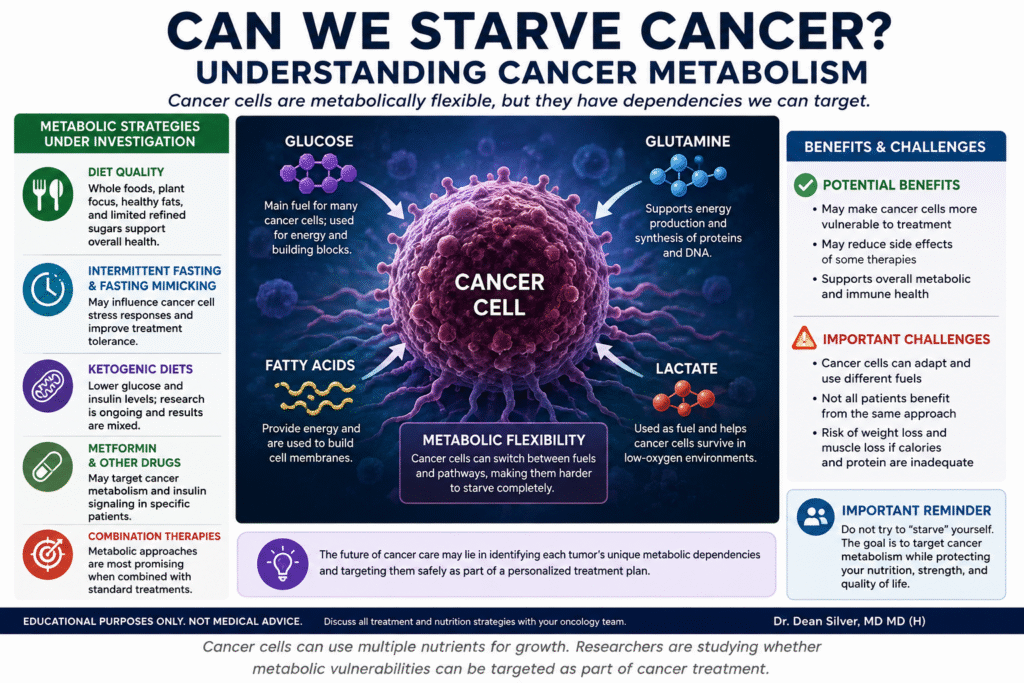
If glucose becomes limited, some tumors may increase their dependence on other fuels. Glutamine is particularly important in many cancers because it can contribute carbon and nitrogen needed for energy production and synthesis of proteins and nucleotides.
Fatty acids can also provide energy and components needed for cellular membranes.
This ability to change metabolic pathways is sometimes called metabolic flexibility. It helps explain why attacking one nutrient source alone may not be sufficient.
Can We Starve Cancer by Targeting Metabolism?
Potentially, but not in the literal sense.
Researchers are investigating whether metabolic interventions can exploit differences between malignant and normal cells. The goal is not to starve the patient. The goal is to identify a metabolic dependency that is particularly important to the cancer and interfere with it without causing unacceptable injury to normal tissues.
This distinction is critical.
Cancer metabolism is increasingly being investigated alongside chemotherapy, radiation therapy, targeted therapy, and immunotherapy rather than simply as an alternative to established cancer treatment.
Ketogenic Diets and Cancer
Ketogenic diets dramatically reduce carbohydrate intake and increase production of ketone bodies. This generally lowers glucose and insulin levels and changes the metabolic environment surrounding a tumor.
The biological rationale is interesting, but the clinical evidence remains incomplete.
A 2025 systematic review and meta-analysis reported metabolic and body composition effects in cancer patients receiving ketogenic diets. However, earlier comprehensive reviews found insufficient evidence to conclude that ketogenic diets improve tumor control or overall survival.
Therefore, ketogenic diets should not presently be described as established cancer treatments.
Fasting and Fasting Mimicking Diets
Another area of research involves intermittent fasting and fasting mimicking diets.
Fasting can alter glucose, insulin, insulin like growth factor signaling, ketone production, and cellular stress responses. Preclinical research has suggested that fasting may potentially increase the vulnerability of some cancer cells while helping normal cells tolerate certain forms of treatment.
Clinical investigation is now underway. Early phase studies suggest that cyclic fasting mimicking diets can be feasible and produce measurable metabolic and immune effects. Larger trials are still needed to determine whether these changes translate into meaningful improvements in cancer outcomes.
Metformin and Cancer Metabolism
Metformin is another example of the relationship between cancer and metabolism.
Originally developed for diabetes, metformin lowers hepatic glucose production and affects insulin signaling. It also influences cellular energy metabolism, including pathways involving mitochondrial complex I and AMP activated protein kinase.
These mechanisms generated substantial interest in metformin as a potential anticancer therapy.
However, laboratory activity and observational associations do not automatically mean that metformin improves cancer survival. Its value appears to vary considerably according to cancer type, molecular characteristics, metabolic status, treatment setting, and clinical trial.
For this reason, metformin should not be considered a universal anticancer drug.
The Danger of Starving the Patient
There is another side to this discussion that is sometimes overlooked.
A patient can lose weight and muscle much more successfully than a tumor can be starved.
Cancer associated malnutrition and cachexia can produce loss of skeletal muscle, weakness, impaired treatment tolerance, reduced functional status, and poorer outcomes. Major oncology nutrition guidelines therefore emphasize maintaining adequate energy and protein intake in patients who are malnourished or at risk for weight loss.
Any metabolic strategy must therefore consider the patient’s nutritional status, body weight, muscle mass, cancer type, medications, and treatment plan.
Where The Research is Going
The future may not involve attempting to starve every cancer in the same way.
A more sophisticated strategy is to determine what a particular cancer depends upon metabolically.
One tumor may have substantial glucose dependence. Another may rely heavily on glutamine metabolism. Another may depend on fatty acid oxidation or mitochondrial metabolism. Individual cancers may also change these dependencies as they evolve or develop treatment resistance.
This creates the possibility of combining molecular profiling with metabolic information to identify vulnerabilities specific to an individual tumor.
The central question may therefore evolve from:
“Can we starve cancer?”
to:
“What does this particular cancer need to survive, and can that dependency be safely targeted?”
That is where the science of cancer metabolism becomes particularly interesting.
Important Perspective
Cancer cannot currently be treated simply by eliminating sugar or following a particular diet. Ketogenic diets, fasting strategies, metabolic medications, and other metabolic interventions remain areas of active investigation and should not replace treatments demonstrated to improve cancer outcomes.
For patients interested in metabolic approaches, the safest strategy is to discuss them with the treating oncology team, particularly during chemotherapy, radiation therapy, immunotherapy, or periods of significant weight loss.
For more information on What Really Causes Cancer please visit our page.
References
- Römer M, Dörfler J, Huebner J. The use of ketogenic diets in cancer patients: a systematic review. Clinical and Experimental Medicine. 2021; 21:501–536.
- Impact of ketogenic diets on cancer patient outcomes: a systematic review and meta-analysis. Frontiers in Nutrition. 2025. PMID 40756563.
- Cyclic fasting mimicking diet in cancer treatment: preclinical and clinical evidence. Cell Metabolism. 2024.
- Zhang C, et al. Intermittent Fasting and Fasting Mimicking Diet: Promising Strategies in Cancer Management. Current Medicinal Chemistry. 2025.
- Muscaritoli M, et al. ESPEN practical guideline: Clinical Nutrition in cancer. Clinical Nutrition. 2021; 40:2898–2913.
- Roeland EJ, et al. Management of Cancer Cachexia: ASCO Guideline. Journal of Clinical Oncology. 2020.
Educational Disclaimer
This article is for educational purposes only. It is not medical advice and does not establish a physician patient relationship. Cancer treatment and nutritional interventions should be individualized and discussed with the patient’s treating oncologist and appropriate healthcare professionals.
Dr. Dean Silver, MD, MD (H)